
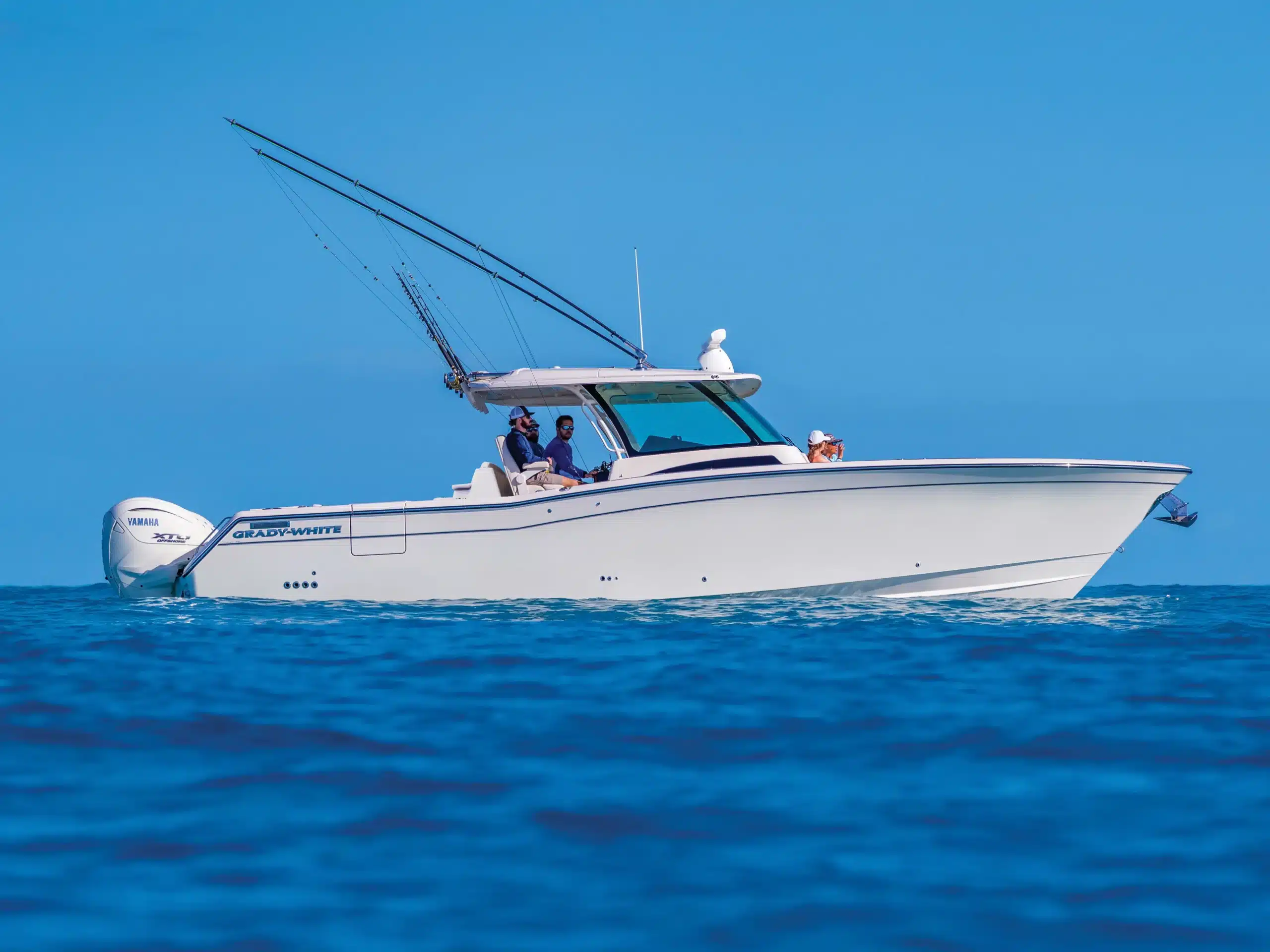
Boating on the Treasure Coast means running in saltwater almost every trip. That salt goes to work on your motor the moment you leave the ramp. Saltwater corrosion is one of the leading reasons outboards fail early, and it often starts in places you never see. A few simple habits and a seasonal inspection will keep salt from shortening the life of your engine.
How Saltwater Corrosion Attacks an Outboard
Salt attacks your outboard in two ways. On the outside, it dries into a crust on the cowling, bracket, and lower unit. That crust pits paint and aluminum. On the inside, salt left in the cooling passages hardens into scale. Scale restricts water flow and traps heat. Saltwater also speeds up galvanic corrosion, where metals such as aluminum, stainless steel, and bronze slowly eat away at each other. In our warm, humid climate these processes move faster than most boaters expect. Damage that would take years up north can show up in a single season here.
Simple Habits That Prevent Saltwater Corrosion
The most important habit is flushing your engine with fresh water after every saltwater trip. Run it long enough for the thermostat to open, so clean water reaches the entire cooling system. Rinse the exterior, including the bracket and trim hardware. Then wipe down the powerhead under the cowling. Check your sacrificial anodes regularly and replace them once they are about half gone. They are designed to corrode so the rest of your engine does not. A light coat of corrosion inhibitor on exposed metal and electrical connections adds another layer of protection.
Let Our Technicians Inspect the Hidden Areas
Some corrosion hides in spots that are hard to reach without pulling parts. The exhaust passages, water jackets, and the area behind the lower unit are common examples. Our certified Mercury technicians can pressure-check the cooling system and replace worn anodes and hardware. We can also treat early corrosion before it becomes a structural problem. Pair a corrosion inspection with your routine service. You can also read our guide on preventing outboard engine overheating, since scale buildup is one of its top causes. When you are ready, contact our Stuart, FL shop to schedule a saltwater corrosion inspection.